Two silicone hoses may look identical yet perform differently after installation. Variations in raw materials, reinforcement, or production conditions can affect dimensions, pressure resistance, and service life. Inadequate inspection may allow these differences to go undetected.
For OEM buyers and engineers, the challenge is not simply finding a hose that meets specifications once. It is finding a
silicone hose manufacturer that can consistently meet the approved requirements across repeated production batches.
Consistent quality depends on controlling the factors that influence product performance, verifying results at appropriate stages, and maintaining reliable production records. Understanding these controls helps buyers evaluate suppliers and reduce quality risks in repeat orders.
Key Takeaways
-
Defined material and reinforcement specifications help reduce batch-to-batch variation.
-
Controlled production conditions support consistent hose construction and physical properties.
-
Inspection and testing should reflect the product specification and intended application.
-
Traceability, corrective actions, and change control help maintain consistency across repeat orders.
Control Raw Materials Before Production
Material variation can affect the quality of finished hoses. Silicone compounds with different formulations or curing characteristics may produce different physical properties, even when the finished products have similar dimensions.
A controlled material specification should define relevant requirements, such as hardness, tensile strength, temperature resistance, and chemical compatibility. Reinforcement materials also need consistent specifications for fabric type, yarn characteristics, and construction.
Material selection must reflect the operating environment. For example, a fuel cell hose may require evaluation of extractables and potential contamination, while a high-temperature air hose may need a compound and reinforcement structure suited to its thermal conditions.
Incoming controls may include material identification, supplier documentation, batch details, storage conditions, and specified verification checks. Where physical properties are tested, specimen preparation and curing conditions should follow the agreed method.
Not every property needs to be retested on every incoming lot. The inspection plan should define the required checks, their frequency, and the supplier evidence used to support acceptance.
Maintain Consistent Production Conditions
Even when the same materials are used, changes in production conditions can affect the finished hose. The
silicone hose manufacturing process therefore needs defined operating parameters and repeatable production methods.
Important factors may include:
-
Compound preparation: Where mixing is performed in-house, material proportions and mixing conditions need to be control
-
Layer formation: Inner and outer layers need the specified thickness and coverage.
-
Reinforcement: Fabric placement, overlap, tension, and layer count should follow the approved construction.
-
Curing: Temperature and curing time must suit the compound and hose structure.
-
Tooling and equipment: Their condition should be maintained to support repeatable geometry and processing.
The appropriate controls depend on the manufacturing method. A fabric-reinforced hose, for instance, requires attention to reinforcement placement and overlap because local variations can affect the wall structure.
Manufacturers should define process parameters for each construction and retain relevant records. This helps prevent variation and supports investigation when a deviation occurs, rather than relying entirely on final inspection.
Inspect Dimensions and Physical Construction
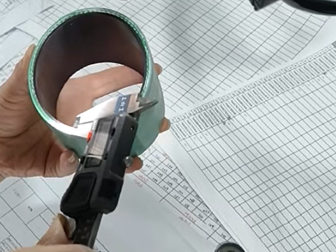
Dimensional consistency is essential when hoses must fit existing equipment, assemblies, or connection points. Deviations can make installation difficult or affect sealing performance.
Typical inspection points include:
Inspection Point
|
Main Consideration
|
Inside diameter
|
Fit with the mating pipe or connection
|
Outside diameter
|
Clamp fit and installation clearance
|
Wall thickness
|
Conformity to the specified hose structure
|
Length
|
Connection spacing and fitting engagement
|
Bend angle and geometry
|
Routing, orientation, and assembly fit
|
Surface condition
|
Visible defects, irregularities, or damage
|
For formed hoses, inspection should consider bend radius, connection orientation, and the position of critical features. Depending on the construction, additional checks may address layer bonding, reinforcement placement, seams, or insert interfaces.
Inspection methods and tolerances should come from the approved drawing and applicable specifications. Measurement locations and reference points must be clear enough for different inspectors to obtain comparable results.
Measuring equipment should also be suitable for the characteristic being checked and calibrated or verified where required. Reliable measurements are part of quality control, not simply a record of the finished product.
Verify Performance Through Application-Specific Testing
Dimensional inspection alone cannot confirm whether a hose will meet its operating requirements. Performance verification should address the conditions the product is expected to encounter.
The appropriate activities depend on the hose design, operating environment, and customer requirements.
Verification Activity
|
Main Purpose
|
Pressure testing
|
Checks performance under specified internal pressure conditions
|
Leak testing
|
Evaluates leakage against defined limits and conditions
|
Vacuum testing
|
Checks deformation or collapse resistance under specified negative pressure
|
Burst testing
|
Determines failure pressure under the defined test method
|
Material testing
|
Verifies selected physical or chemical properties
|
Application-specific testing
|
Evaluates requirements such as heat aging, media exposure, or pressure cycling
|
Compliance review
|
Checks relevant declarations, reports, and supporting documentation
|
Not every hose requires every test. Vacuum resistance is particularly relevant where suction could deform the hose, while internal-pressure applications require an appropriate pressure-verification plan.
Manufacturers should define test conditions, acceptance criteria, and frequency. Buyers should distinguish between product qualification, routine production checks, and periodic verification.
The inspection plan should identify which checks apply to every unit, which use batch sampling, and which are destructive tests. Where both pressure and vacuum conditions apply, both may need evaluation.
A passing result from one test should not be treated as proof of suitability for every operating condition.
Review Results Across Production Batches
Checking whether each result passes is important, but it does not provide the complete picture of consistency.
A critical dimension may remain within tolerance while gradually moving toward a limit. Comparing results across batches can help identify developing variation before it produces nonconforming products.
Manufacturers can review dimensional measurements, test results, defect patterns, and relevant process records. Where appropriate, statistical process control or process-capability analysis can support the evaluation of critical characteristics.
The purpose is to use production data to guide action. Records are more useful when they reveal trends and support decisions than when they are retained only for documentation.
Manage Nonconforming Products and Corrective Actions
Consistent quality does not depend on assuming defects will never occur. A reliable quality process also needs a clear method for handling products that do not meet requirements.
When a nonconformity is identified, the manufacturer should:
-
Identify and isolate the affected products.
-
Review inspection results and relevant production records.
-
Assess whether related batches may also be affected.
-
Investigate the cause and implement appropriate action.
-
Verify the effectiveness of the action.
The investigation may need to consider materials, production parameters, tooling, equipment, measurement methods, and handling.
Reworking or rejecting an individual product can resolve an immediate issue, but it does not necessarily prevent recurrence. Corrective action should address the underlying cause where necessary, with follow-up evidence showing whether the action has been effective.
Maintain Batch Traceability and Quality Records
Traceability connects finished products with the materials and production information associated with them. It is particularly useful for repeat OEM orders and investigations involving products already in service.
Depending on the product and customer requirements, relevant records may include:
-
Raw material identification and lot information.
-
Approved drawing and construction revisions.
-
Production dates, batch numbers, and relevant process records.
-
Inspection and test results.
-
Nonconformity reports and corrective actions.
-
Final product identification and shipment information.
These records help identify whether an issue is associated with a particular material lot, production period, or manufacturing condition.
For buyers, it is useful to understand how the supplier identifies batches, links records, and retrieves information when needed. Traceability should help narrow the affected population and support investigation, not simply generate additional paperwork.
Control Changes That May Affect Product Quality
A hose approved in one production run may perform differently if its materials, construction, or manufacturing conditions change.
Relevant changes may include:
-
Compound or reinforcement substitutions.
-
Adjustments to layer structure or wall thickness.
-
Changes in curing conditions or production equipment.
-
Modifications to geometry or tooling.
-
Changes to the manufacturing method or location.
Proposed changes should be reviewed before implementation. Depending on their potential impact and the customer’s requirements, additional inspection, testing, sample approval, or customer authorization may be necessary.
For OEM projects, buyers should clarify which characteristics are controlled and how proposed changes will be communicated. This helps prevent unapproved modifications from affecting fit, performance, or compatibility with existing equipment.
How Quality Management Systems Support Consistency
A quality management system provides a framework for controlling processes, assigning responsibilities, maintaining records, managing nonconformities, and improving operations.
ISO 9001 establishes general quality management requirements. IATF 16949 adds automotive-specific requirements for organizations within its applicable scope.
These frameworks support consistent manufacturing, but certification alone does not guarantee that every hose will meet every application requirement. Product conformity still depends on suitable production controls and verification against the approved specification.
Buyers should check the manufacturing site, certification scope, and validity. A certificate covering manufacturing should not automatically be interpreted as covering activities outside its stated scope.
Choosing a Manufacturer for Consistent Silicone Hose Quality
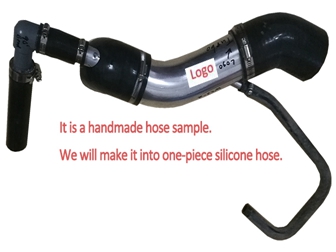
When evaluating a silicone hose manufacturer in China, buyers should look beyond appearance, price, and one successful sample. Material controls, repeatable production conditions, application-specific verification, traceability, and change management all contribute to consistent repeat production.
SUNRISE manufactures performance silicone hoses and silicone-molded products for a range of applications. Its product range includes different hose constructions and custom options that buyers can review against their technical requirements.
For an OEM project, the proposed construction, inspection requirements, validation activities, and documentation should be agreed against the customer’s specification. Ask how these requirements will be controlled and recorded through repeat orders.
Explore SUNRISE’s silicone hose product range to review available constructions and custom options.
Frequently Asked Questions
What Quality Documents Should an OEM Buyer Request?
Depending on the application, buyers may request the approved drawing and specification, material or construction information, relevant inspection and test reports, batch identification, and applicable compliance documents.
The required documents, reporting frequency, and approval process should be agreed before production.
Does Every Silicone Hose Need Pressure Testing?
Not every hose requires the same pressure test or testing frequency. Requirements depend on the construction, operating conditions, applicable specifications, and customer agreement.
The inspection plan should distinguish between checks performed on every unit, batch sampling, and destructive qualification tests. Where both pressure and vacuum conditions apply, both may need evaluation.
Does ISO 9001 or IATF 16949 Certification Guarantee Product Conformity?
No. These certifications concern the quality management system within its stated scope. They do not replace product-specific inspection, testing, or verification against customer requirements.
How Can Buyers Assess Consistency Before Placing Repeat Orders?
Buyers can review results from multiple production batches, examine dimensional and performance records, and assess the supplier’s traceability and change-control practices.
Consistency should be judged against defined acceptance criteria and the approved construction, not appearance alone.